
Vejamos mais uma passagem de O Descortinar da Alta Magia, de Daniel Mastral:
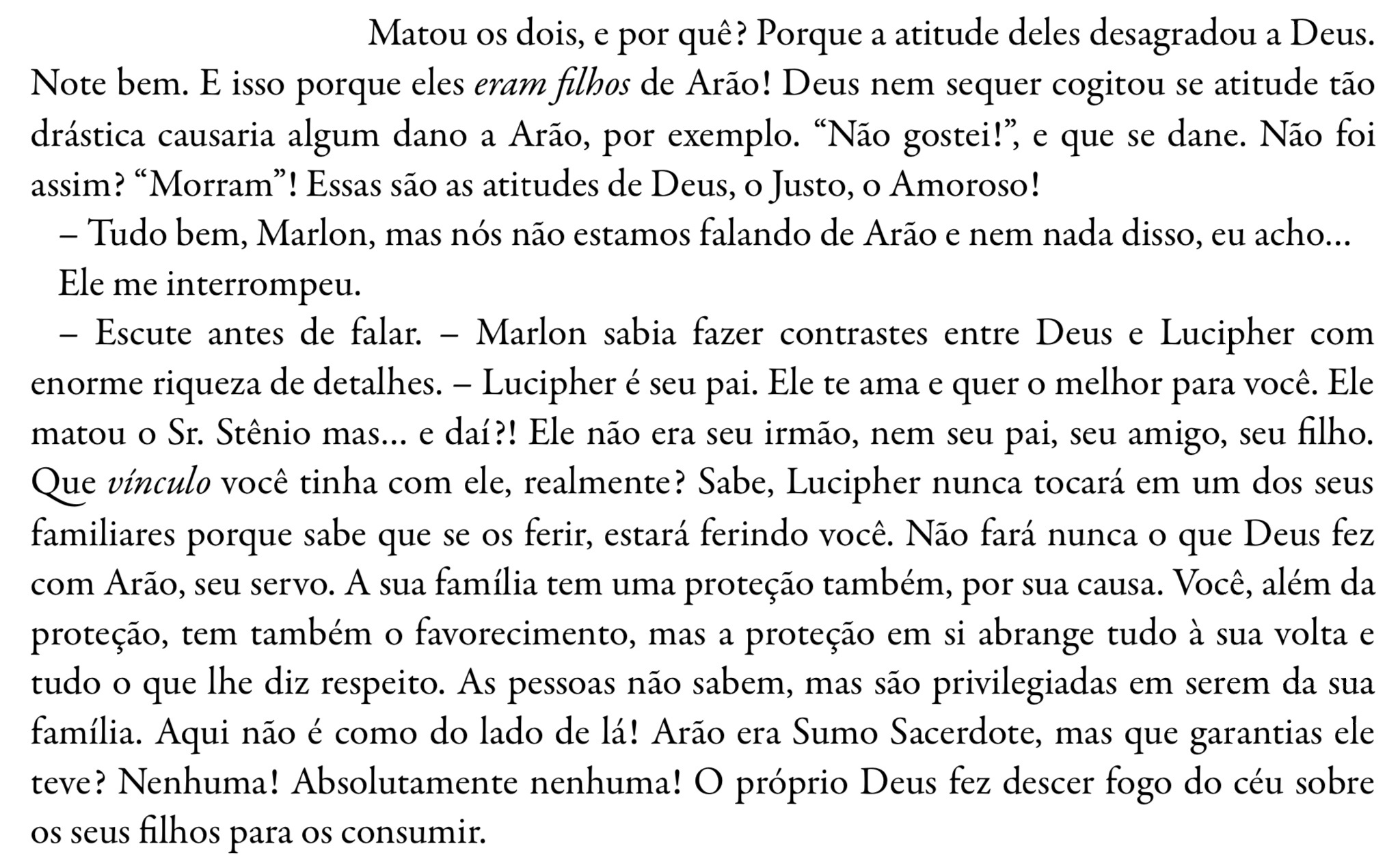
Esta passagem mostra uma grande ignorância das coisas divinas, como é de costume na cultura geral, e mesmo entre as mentiras dos vários cultos iniciáticos.
São dois os grandes erros nesse grosseiro juízo a respeito da conduta divina:
Primeiro erro: o procedimento defendido pelo autor é obviamente injusto, já que constitui Justiça da parte daquele que é Juiz não fazer acepção de pessoas, isto é, não dar preferência para quem é próximo em detrimento do distante, para o conhecido em prejuízo do desconhecido, etc. Assim, se os filhos de Aarão pecaram e isso lhes foi imputado como erro, a sua filiação não lhes poderia salvar sem que isso maculasse a Justiça divina.
Nem se fala, aqui, da dúvida a respeito de qual foi a realidade por trás dos fatos do caso em questão, já que sempre convém verificar a interferência do Ouroboros, que tipicamente age para prejudicar a integridade do testemunho da Palavra. Não é necessário nem mesmo entrar nesse tipo de mérito, para verificar a ignorância do argumento, a respeito do mais superficial e óbvio aspecto do que um proceder justo da parte de qualquer Juiz. Basicamente o autor da citação reclama que Deus não é injusto como se poderia desejar que o fosse, mundanamente, e ainda chama isso de injustiça.
Segundo erro: a suposição, por premissa oculta, de que qualquer relacionamento com Deus implique em qualquer tipo de garantia, mostra uma profunda ignorância da realidade da vida espiritual, e do que significa viver na Presença de Deus. A malícia típica dos seguidores do Usurpador é tosca e grosseira demais para compreender a força da confiança no Amor divino, e de como que qualquer idéia de garantia só significaria uma diminuição nessa alegria da entrega confiante no Bem de Deus. Novamente, o autor reclama por algo que seria indigno até dos fiéis que amam a Deus, nem para falar da ofensa contra o próprio Deus.
E aqui, novamente, nem precisamos falar de segundas implicações na alegação da qualidade de Aarão como “Sumo Sacerdote”. Como já vimos, na nossa leitura do Êxodo, este ofício religioso foi provavelmente instituído no contexto do Culto do Ouroboros, e não na adoração livre ao Deus verdadeiro, como Moisés fazia. Mas não é preciso sequer levantar este tema. A fraqueza do argumento já o destrói por dentro, sem ser necessária esta análise secundária.
 JESUS É BOM
Religious rhetoric sucks. Fear of Heaven refers to a person who strives to protect his Good Name Reputation. Its known as “Baal Shem Tov”.
The Av time oriented commandment of t’shuva
K’vanna of the High Holy Days: Breathing the Live Spirits of the Avot. The Resurrection of the Dead. The k’vanna of the second blessing in the Shemone Esrei. High Holy Days – T’shuva for tumah middot as opposed to prophetic mussar defined tohor middot.
A K’vanna of the High Holy Days. The k’vanna of the 2nd blessing of the Shemone Esrei. The Divine Presence Spirit Name simply not a word that fools who translated the Xtian bible and Muslim koran can translate to other words. Attempts to translate the Divine Presence Spirit Name to other words defines the sin of the Golden Calf throughout the Ages. Never once does the Xtian bible or Muslim koran ever bring the Spirit Name revealed in the first Sinai commandment Name. To understand the Shemone Esrei tefillah required to discern the distinction which separates the Av from the Toldoth: Kre’a Shma from Tefillat Shemone Esrei.
The word אדוני a word which the lips of Man can frame and pronounce. This Hebrew word functionally means “הבדלה”. In the 2nd blessing of the Shemone Esri a basic הבדלה separates the living from the dead. The former breath live spirits, while the latter does not. Words spoken do not equal to the spirit of life that breaths and causes the soul of man to live.
This fundamental הבדלה separates the Divine Presence Brit Spirits of the Avot: Avraham Yitzak and Yaacov. Blowing the Spirit of אדוני requires Oral Torah wisdom. When a sage breathes the Divine Presence Spirits his Spirit Soul becomes “ONE” (think kre’a shma) with the living Spirit Souls of the Avot. Hence breathing these Spirit Souls quickens the lives of the Avot and they live as resurrected from the dead in all generations of bnai brit Israel who breath the Divine Spirit Name and do not kiss the Golden Calf of worshipping words which attempt to pronounce the Name revealed at Sinai as words.
The Spirit Name has 3 parts: One affixes with the oath brit sworn at Gilgal – the Rashi tefillen. The Second affixes with the oath brit sworn at Sh’Cem – the Rabbeinu Tam tefillen.
The Third affixes to הדבר דבלב, a matter of the heart. Herein defines the k’vanna of dav’ning tefillah as opposed and contrasted by saying T’hillem prayers.
The last Parshah of ויקרא inverses the Order of the Avot like as does the Shabbat Mussof Amidah inverses the Order of the Hebrew Alphabet. The Order of the Shemone Esrei affixes 3 blessings at the beginning and 3 blessing at the conclusion. The k’vanna how to blow the spirits of the Avot inverses just like as learned from the closing Parshah of ויקרא. Herein defines the k’vanna of spirits blown in the Shabbat Shemone Esrei and its inverse Order blown during the Musof Amidah. The same equally defines the opposing k’vannot between the Yom Kippur Amida of minchah and Neilah tefillah. כלל: The morning and afternoon tefillot always affix to the two kre’a sha wherein a person accepts the blessings and curses of the Torah.
Hebrew: ש (shin) corresponds to the sound “sh.” Aramaic: ד (dalet) is used for the same sound. This interchange is part of the historical evolution of both languages. The Middah spirit אל directly refers to יום הזכרון. The Divine Name האל by contrast affixes with the שם מ”ב at the end of korbonot. The k’vanna to uproot avoda zarah from within the heart of bnai brit Israel. The interpretation of the word ישראל: servant of אל. Just as a mitzva never to forget that HaShem judged the Gods of Egypt to liberate Israel from slavery; so too a similar mitzva never to forget the tumah of the sin of the Golden Calf.